Dear reader,
Given the significant rise in strength training and the widespread focus on Pilates, I thought it would be valuable to provide some insight into its history and core philosophy. Having taught Pilates for many years, I am a co-founder of the philosophy that Joseph Pilates embodies—the theology of movement and the kinetic form we are designed to follow. This involves mindful, precise, and controlled movement, understanding how each spinal disc and joint works with flow. As my students know, I constantly stress the importance of moving with mindfulness.
Pilates is fundamentally built on these principles. This month, I want to share a little on the crossover with Yoga, a practice I deeply appreciate, enjoy, and incorporate elements of (within legal teaching limits through CPD courses). I find both disciplines incredibly complementary for personal well-being and care.The Current Hype: Strength and Conditioning
The current popularity, or “big rage,” of Pilates stems from a growing awareness of the benefits of strength training. Pilates is a potent exercise method that develops core-to-toe strength, significantly benefiting muscle strengthening, bone density, and stamina through strength postures and overall body conditioning.A Brief History
The Pilates phenomenon started many years ago, gaining crucial momentum in the 1990s when it was embraced by the Hollywood scene in America. It was initially popular for its body-sculpting effects and as a metabolism booster. However, Pilates is not merely a stretch; it is challenging. While it can be adapted for physiotherapy to aid injury rehabilitation, it also serves as an excellent method for developing strong body forms and structures for those without specific exercise considerations.
The founder, Joseph Pilates, was born in Germany on December 9, 1883. His life story is remarkable. As a child who suffered from various illnesses, he decided to take control of his health and well-being. He developed his system, which we now know as ‘Pilates,’ while interned in a camp—a testament to his inspiring frame of mind.
He originally designed only 34 exercises. Over time, and with the influence of his wife and American practitioners, the method has been slightly adapted. Tools like reformers, rings, physio balls, and resistance bands have been introduced to aid positions, especially for physio-related work. Today, Pilates is recognized as a leading medical support exercise framework within the physiotherapy industry, often included in exercise prescriptions for muscular and joint issues.
Sadly, Joseph Pilates died in 1967, never fully seeing the global realization of his vision. He believed his system, which he called “Contrology,” should be taught universally, even suggesting it be a mainstream educational practice in schools throughout the United States.The Foundation of the Practice: Contrology
Joseph Pilates left limited written materials. However, his work, passed down through generations of teachers (“word-of-mouth from the universal language of movement”), has preserved the fundamental path. His two short books are primary references, with Return to Life Through Contrology serving as the crucial source for the exercise descriptions in Pilates anatomy. This text is the foundation that all teaching styles and approaches should follow.
Today, Pilates is everywhere—in private studios, academic institutions, fitness centers, and medical facilities across the globe. The younger generation, in particular, is recognizing the importance of strength training alongside cardiovascular exercise (jogging, increasing heart rates). It serves clients from elite athletes to those with limited capacity due to disease or injury.
With my experience (including high-level qualifications in Cardiac Rehab and GP Referrals, and two decades of teaching in Oxford), I can attest to the “magic of movement.” Pilates is not just an exercise; it is a system of physical and mental conditioning that enhances strength, flexibility, coordination, reduces stress, improves mental focus, and fosters an important sense of well-being.The Six Key Principles
Pilates can be for anyone, and a good teacher modifies each exercise to progress you from novice to advanced. Before exploring the anatomy, it’s essential to understand the foundation—the six key principles:
1. Breath:
Often described as the Fuel of the Power House (the body’s engine), breath is central to the mind-body-spirit connection Joseph Pilates intended. Optimal use of breath is crucial, a concept explored in greater depth in my classes.
2. Concentration:
This is the single-minded direction of attention required to master a Pilates exercise. It involves a mental checklist for focus and maintaining that concentration throughout the session. I always provide options for novice, intermediate, and advanced levels.
3. Centering (Powerhouse):
This relates to the body’s central gravity and the core muscles, referred to as the Powerhouse. It’s about distributing your body weight evenly and “setting” the core before movement begins—pulling the lower back toward the mat and ensuring proper alignment (e.g., legs beneath the hips). Whether you are in prone (on your front) or supine (on your back), the Powerhouse must be engaged.
4. Control:
Defined as the refined regulation of a given action’s execution. As skill increases, control refines, leading to fewer errors, greater coordination, and the ability to reproduce the exercise successfully with less effort and avoiding excessive tension. You must flow; you must not jerk or tense up.
5. Precision:
This is what distinguishes Pilates from many other systems—the exact manner in which an action is executed. Knowledge of anatomy aids in achieving precision, and greater precision yields greater benefits for muscle strengthening, joint mobility, and bone density.
6. Flow:
The essential quality of smooth and uninterrupted continuity of movement. In my classes, I create set cycles that blend methods with a flow of movement.Your Wellness Journey
There is no need to be perfect in class; it is your workout. However, constant teaching reminders will help you slow down, concentrate, and internalize the process, which will have a profound impact on your life’s well-being and body development.
If you have never considered Pilates, I urge you to explore it. It is an amazing exercise method and provides wonderful cross-training support for cardio-based activities like running, spinning, or team sports. Crucially, Pilates supports those with exercise considerations, illnesses, or those needing physio support, and is highly recommended by health services.
On a deeper level, Pilates is also a great advocate for mental health. In our stressful Western world, high stress levels and difficult life events affect our well-being. Joining a class can help address this, bringing a sense of focus and calm.
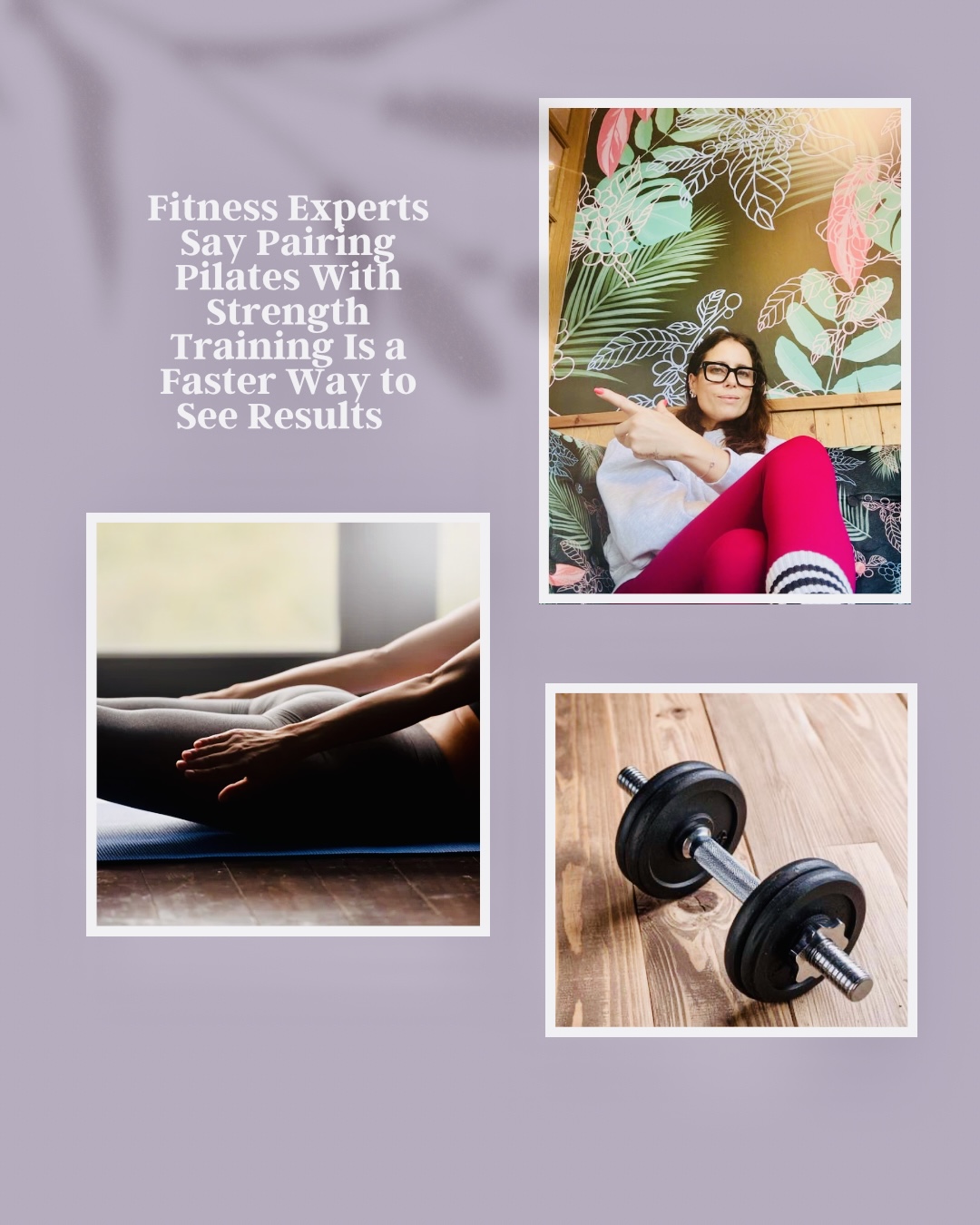
As fitness experts often say: Pairing Pilates with Strength Training Is a Faster Way to See Results!
I hope you enjoyed the read. If you have any questions, please feel free to drop me a private message. I love sharing this information and teaching within my community.
All my love, and I hope to see you in class soon,
Ciao for now xx